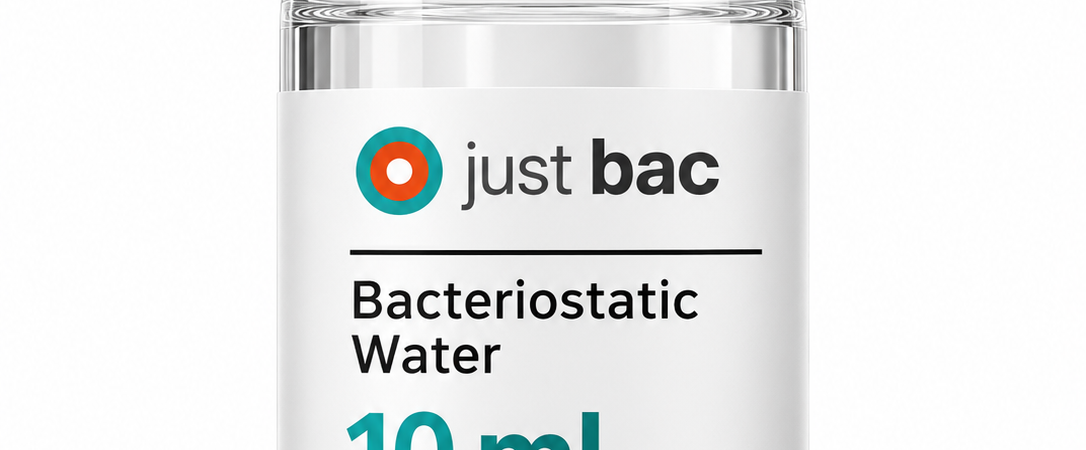
Bacteriostatic water and sterile water look the same in the vial, and both start out sterile. The difference comes down to one ingredient, and that ingredient changes how the vial can be used.
The short answer
| Bacteriostatic water | Sterile water | |
|---|---|---|
| Preservative | 0.9% benzyl alcohol | None |
| Draws per vial | Multiple | Single |
| After opening | Up to 28 days, refrigerated | Use immediately, discard the rest |
What the benzyl alcohol does
Every time a vial’s stopper is pierced, there is a small chance of bacteria getting in. In plain sterile water, anything that gets in can grow freely. In bacteriostatic water, the 0.9% benzyl alcohol slows that growth. That is why it is called bacteriostatic (it stops bacteria multiplying) rather than bactericidal (killing them).
One point is often misunderstood: the preservative does not sterilise anything. It only slows growth in the water itself between draws. Good handling still matters.
When is each one used?
Sterile water suits one-off use, where the whole vial is used at once. Bacteriostatic water suits work where small amounts are drawn from the same vial over several days or weeks. Some substances are not compatible with benzyl alcohol, which is why plain sterile water still exists. Always follow the instructions that come with the material you are working with.
Which one is better value?
For repeated small draws, bacteriostatic water usually is, because one vial lasts up to 28 days instead of being thrown away after one use. Compare prices per ml, not per vial.
Summary
Same water, one difference: 0.9% benzyl alcohol. It lets one vial be used more than once over up to 28 days. Read our guide to how long bacteriostatic water lasts, or shop Just Bac 3 ml and 10 ml vials.
Just Bac supplies bacteriostatic water as a laboratory reagent for research use only. It is not a medicine or a medical device, and nothing in this article is medical advice.