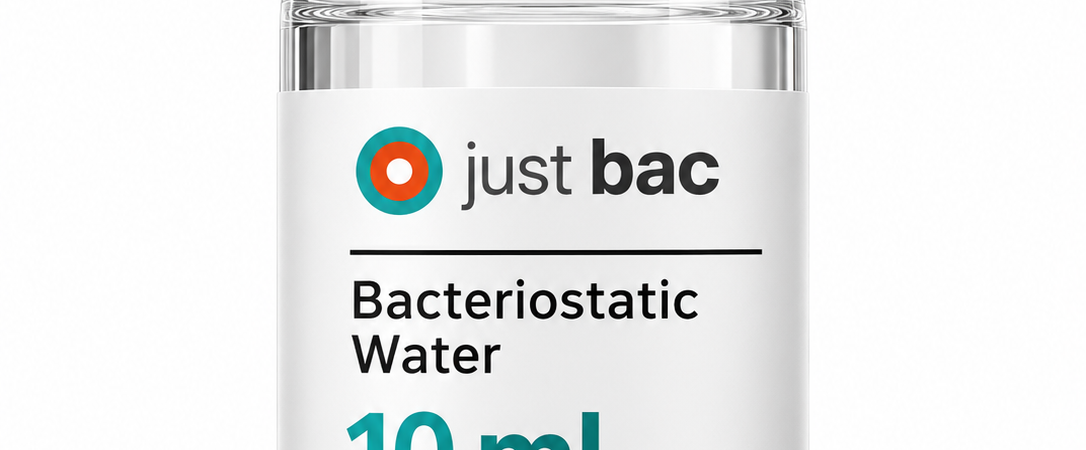
Bacteriostatic water and sodium chloride solution (saline) are both clear, sterile liquids sold in similar vials, so they are often confused. They are not interchangeable.
What each one is
- Bacteriostatic water: sterile water with 0.9% benzyl alcohol as a preservative. No salt.
- Sodium chloride 0.9% (normal saline): sterile water with 0.9% sodium chloride, which is salt. Usually no preservative.
- Bacteriostatic saline: a third product that has both, 0.9% sodium chloride and a benzyl alcohol preservative.
The matching “0.9%” is a coincidence that causes much of the confusion. In one it is a preservative; in the other it is salt.
Side by side
| Bacteriostatic water | Sodium chloride 0.9% | |
|---|---|---|
| Contains salt | No | Yes, 0.9% |
| Preservative | 0.9% benzyl alcohol | Usually none |
| Multi-draw | Yes, up to 28 days | Usually single use |
Why the difference matters
Some materials dissolve or behave differently in a salt solution than in plain water, and some are not compatible with benzyl alcohol. The right diluent depends entirely on what you are working with, so always check the instructions or specification that comes with it rather than swapping one for the other.
How to tell them apart
Read the label. It should clearly state the contents. Just Bac labels show the composition, “0.9% benzyl alcohol”, along with the lot number and expiry on every vial.
See also: bacteriostatic water vs sterile water.
Just Bac supplies bacteriostatic water as a laboratory reagent for research use only. It is not a medicine or a medical device, and nothing in this article is medical advice.